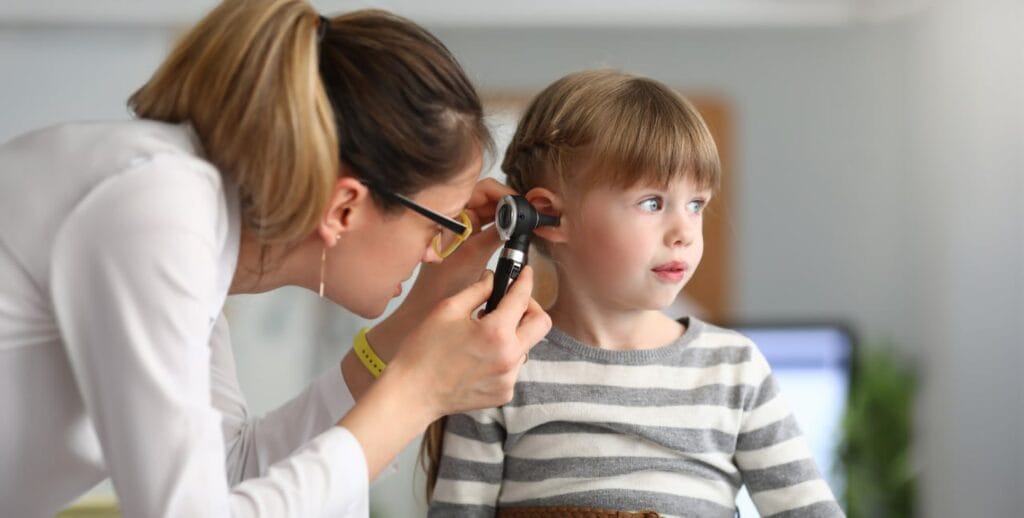
A pediatric hearing test is a hearing check designed for children, using methods matched to your child’s age. Babies are tested while resting or asleep, toddlers through play and sound, and school-age children with headphones much like an adult test. None of it hurts, and most children find it surprisingly fun.
This guide explains the four main ways children’s hearing is tested, what to expect at the appointment, and how to prepare your child. If you would like a children’s hearing test, our team offers pediatric hearing services in Newmarket, led by Fariba Denak, Doctor of Audiology.
Clinically reviewed by Fariba Denak, Doctor of Audiology (CASLPO-regulated) · Newmarket Hearing ClinicThe test depends on your child’s age and ability to take part. Newborns are screened with objective tests that need no response, infants and toddlers are tested using sound and play, and school-age children use headphones. Early testing matters because hearing supports speech, language, and learning.
Pediatric Hearing Test: 4 Easy Methods by Age
The ages below are approximate. Your audiologist chooses the method that suits your child’s age, development, and comfort.
Objective tests
Tests such as otoacoustic emissions (OAE) and auditory brainstem response (ABR) measure how the ear and hearing nerve respond to sound without your baby having to do anything. They are usually done while the baby is calm or asleep.
Visual reinforcement audiometry
Your child learns to turn toward a sound and is rewarded with a lit-up toy. The audiologist watches for those head turns to find the softest sounds your child hears.
Conditioned play audiometry
Hearing testing becomes a game. Your child drops a block in a bucket or places a peg in a board each time they hear a sound.
Standard hearing test
Older children wear headphones and respond to beeps, much like an adult test, and may also have speech testing.
Many children also have a quick middle ear check (tympanometry) to look for fluid behind the eardrum, which is a common reason for temporary hearing difficulties. Our guide to audiometry testing explains what each test measures.
When Should Your Child Have a Hearing Test?
- As a newborn. In Ontario, babies are offered hearing screening through the Infant Hearing Program.
- If your child’s speech or language seems delayed.
- After repeated ear infections or fluid in the ears.
- If your child does not respond to sounds or seems to ignore you.
- If a teacher mentions difficulty paying attention or following instructions.
- If you have a family history of childhood hearing loss.
Not sure what to look for? Our guide on the signs of hearing loss in children lists the signs parents often miss.
What to Expect at a Children’s Hearing Test
A conversation
We ask about your child’s birth and health history, ear infections, speech development, and any concerns at home or school.
An ear check
We look in your child’s ears to make sure wax or an infection is not affecting the results.
The hearing tests
The tests are chosen for your child’s age. They are painless and usually feel like play.
Your results
We explain what we found in plain language and discuss next steps with you.
If wax is blocking the view, we may recommend ear wax removal, which is also available for children.
How to Prepare Your Child for a Kids Hearing Test
- Book the appointment for a time when your child is rested and fed.
- For babies, plan around a nap if possible and bring a bottle or pacifier.
- For toddlers and older children, explain that they will play listening games.
- Bring any previous hearing test results and a list of your concerns.
What Happens if the Test Finds a Hearing Problem?
A hearing problem does not always mean permanent hearing loss. Fluid in the ears, for example, is common in young children and is often temporary. If the test does show hearing loss, we explain the type and degree, discuss options such as medical referral, hearing aids, and support at school, and plan follow-up. Our guide on hearing loss in children explains the causes and treatment options.
Pediatric Hearing Test: Frequently Asked Questions
What is a pediatric hearing test?
A pediatric hearing test is a hearing check for babies, toddlers, and children that uses methods matched to the child’s age, from objective tests that need no response to play-based and headphone tests.
Does a children’s hearing test hurt?
No. The tests are painless. Babies are tested while calm or asleep, and older children usually find the listening games fun.
At what age can a child’s hearing be tested?
From birth. Newborn screening is done in the first days of life, and audiologists have methods for every age after that.
How long does a kids hearing test take?
It depends on your child’s age and how well they can take part. Allow time for the conversation, the ear check, the tests, and a discussion of your results.
Do I need a referral for a children’s hearing test?
No. You can book directly with our clinic. Hearing screenings and consultations are free.
Worried about your child’s hearing?
Book a visit with Fariba Denak, Doctor of Audiology, and get clear answers. No pressure, no obligations.
Book Your Child’s Hearing TestKeep reading