
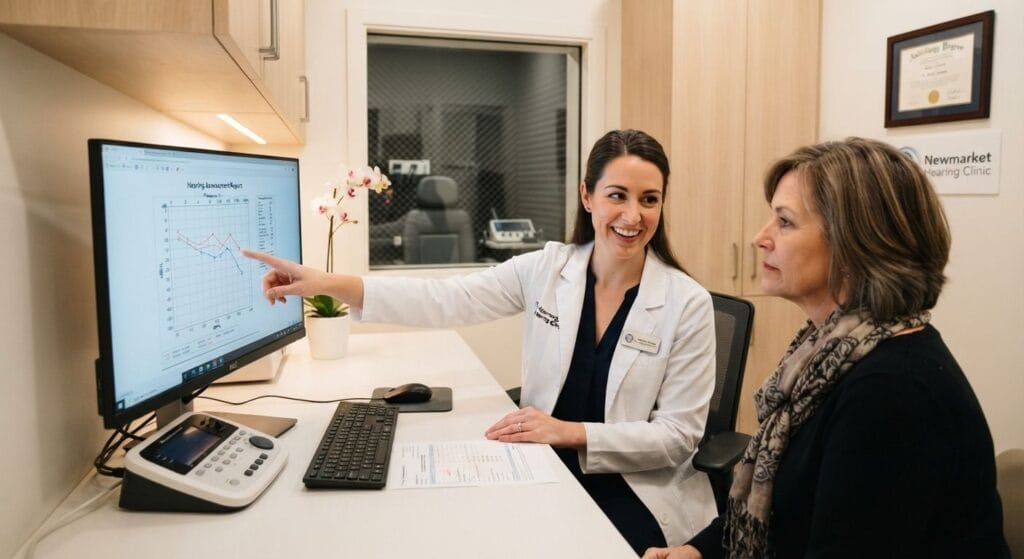
Over-the-counter hearing aids are hearing devices sold without a prescription or a visit to a hearing professional. In Ontario, hearing aids currently still require a prescription from a physician or audiologist, but the provincial government has announced plans to change that. This guide explains where things stand, who these devices may suit, and when an audiologist-fitted hearing aid is the safer choice.
Whatever you decide, a hearing test is the best first step. Our team offers a hearing assessment in Newmarket with Fariba Denak, Doctor of Audiology.
Clinically reviewed by Fariba Denak, Doctor of Audiology (CASLPO-regulated) · Newmarket Hearing ClinicLast reviewed: November 2026. This area is changing, so we will update this page when new rules take effect.
In Ontario today, hearing aids require a prescription from a physician or audiologist. On October 20, 2026, the government announced it plans to allow over-the-counter hearing aids, with the legislative change to be included in a fall economic update. No start date has been announced. OTC devices are aimed at milder hearing loss, and a hearing test is still the best way to know what you need.
What Is the Current Rule in Ontario?
Under Ontario’s Regulated Health Professions Act, 1991, hearing aids are currently sold only with a prescription from a physician or audiologist. The government has said that the planned change would not affect existing hearing aid prescriptions or coverage. In the meantime, the rules that apply to you today have not changed.
The College of Audiologists and Speech-Language Pathologists of Ontario (CASLPO) has said it sees OTC hearing aids as a possible additional entry point for adults with mild to moderate hearing loss, while stressing that hearing loss benefits from assessment and ongoing care by regulated professionals. You can read its update on the consultation.
OTC vs Audiologist-Fitted Hearing Aids: 5 Key Differences
| OTC hearing devices | Audiologist-fitted hearing aids | |
|---|---|---|
| 1. Hearing test | Usually self-assessed | Diagnostic hearing test first |
| 2. Who they suit | Mild to moderate hearing loss, as described by those proposing them | All degrees of hearing loss, including complex cases |
| 3. Fitting | Self-fit, with limited verification | Programmed to your results and checked in the ear |
| 4. Medical screening | Limited, so problems can be missed | Ear check and referral if something medical is found |
| 5. Follow-up | Often self-managed | Adjustments, cleaning, and support over time |
Who Might Consider an OTC Device?
- Adults who notice mild difficulty in some situations
- People who have already had a hearing test and were told the loss is mild
- People comfortable setting up and adjusting a device themselves
When to See an Audiologist Instead
- Hearing loss in only one ear, or a sudden change in hearing
- Ear pain, drainage, dizziness, or ringing in one ear
- Hearing loss that makes everyday conversation hard
- Children, or anyone who cannot reliably self-fit a device
- Tinnitus that bothers you, see our tinnitus treatment in Newmarket
The Canadian Academy of Audiology has said people considering OTC devices should see an audiologist if they cannot reliably self-assess or self-fit the device, or if they are worried about exposure to loud volume. Read its position statement.
Why a Hearing Test Still Comes First
Hearing loss can have more than one cause, and some causes need medical attention. A hearing test shows the type and degree of loss, which helps you decide whether a simple device or a custom-fitted hearing aid is right. Our guide on what a hearing assessment is explains the visit, and a hearing assessment at our clinic starts at $90, applied toward hearing aids if you purchase within 60 days. Hearing screenings and consultations are free.
If you do choose hearing aids, our guides on how to choose the right hearing aids and the types of hearing aids can help. Ontario’s ADP currently supports prescribed hearing aids, and our hearing aids start at $500 per device with a free one-week trial.
Over-the-Counter Hearing Aids: Frequently Asked Questions
Are over-the-counter hearing aids legal in Ontario?
Not yet. Today, hearing aids in Ontario require a prescription from a physician or audiologist. The government announced on October 20, 2026 that it plans to allow OTC hearing aids but has not given a start date.
Who are OTC hearing aids for?
They are generally intended for adults with mild to moderate hearing loss. A hearing test helps you know where you fall.
Will OTC hearing aids replace audiologists?
No. They are being described as an additional option, not a replacement. Many people will still need professional testing, fitting, and follow-up.
Will ADP cover OTC hearing aids?
The government has said the change does not affect existing hearing aid prescriptions or coverage. Check the Government of Ontario hearing devices page for current ADP details.
Do I need a referral for a hearing test?
No. You can book directly with our clinic.
Not sure which option is right for you?
Book a free consultation with Fariba Denak, Doctor of Audiology, and start with a clear picture of your hearing. No pressure, no obligations.
Book Your Free ConsultationKeep reading