
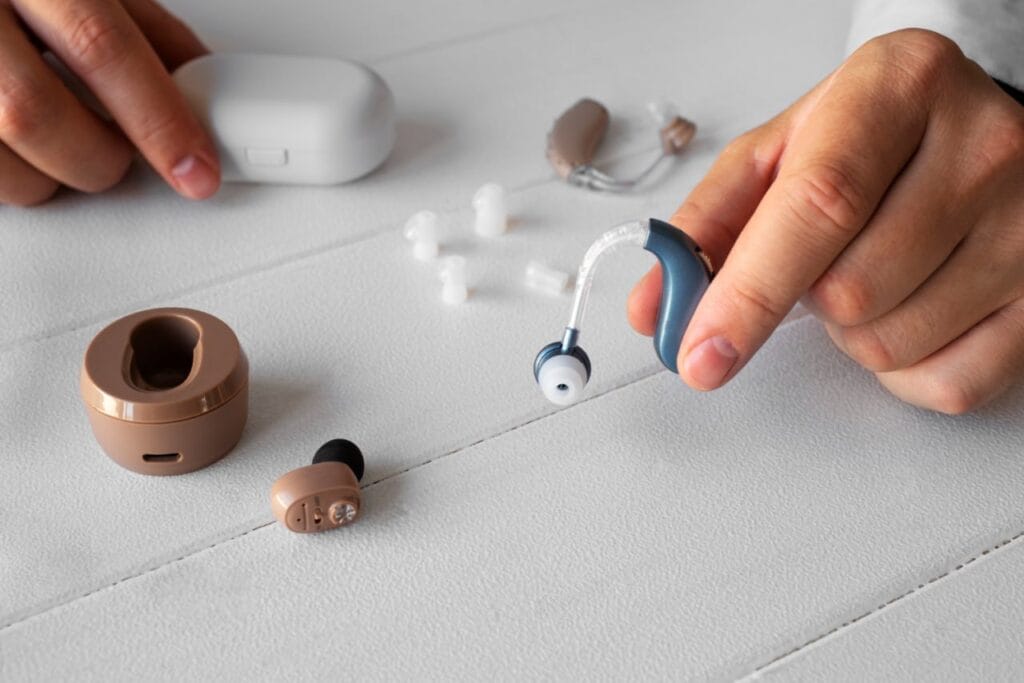
Hearing aid maintenance is the quiet habit that decides whether your devices last for years or start crackling after one humid summer. The good news is that it takes about two minutes a day, and most hearing aid problems we see in the clinic come down to wax, moisture, or a dead battery.
This guide covers nine habits that keep your devices working, a quick troubleshooting table, and how to tell when it is time to book a repair. When something needs a professional, our team offers hearing aid repair in Newmarket, led by Fariba Denak, Doctor of Audiology.
Clinically reviewed by Fariba Denak, Doctor of Audiology (CASLPO-regulated) · Newmarket Hearing ClinicWipe your hearing aids every day, clear wax from filters and domes, keep them dry overnight, charge or change batteries on a routine, store them in their case, and book a professional check-up at least once a year. If basic steps do not fix a problem, stop troubleshooting and call us.
Habit 1: Wipe Them Down Every Day
Take two minutes each evening, when you remove your hearing aids. Use a soft, dry cloth or the small brush that came with your devices to clear dust and debris from the casing, microphone openings, and battery door. Skip water, alcohol wipes, and household cleaners, which can damage the electronics.
Habit 2: Clear Wax and Debris
Earwax is the number one cause of weak or cut-out sound. Most devices have a small wax guard or filter and a dome or earmold that sits in the ear canal. Check them daily and replace wax guards on the schedule your manufacturer recommends. If you notice sound getting quieter, a clogged guard is the first thing to look at.
If your ears produce a lot of wax, a blocked canal can cause trouble for both you and your devices. Safe ear wax removal in Newmarket keeps the ear canal clear and protects your hearing aids at the same time.
Habit 3: Keep Batteries and Chargers in Order
Whether you use disposable batteries or rechargeable devices, a simple routine prevents most “my hearing aid died” moments.
- Disposable batteries: Let a new battery sit for a minute or two after removing the tab so it can activate, and keep spares with you. Open the battery door at night so moisture can escape.
- Rechargeable devices: Charge them on a regular schedule, ideally overnight, using the charger supplied with your devices. Keep the charging contacts clean and dry.
- Dead or weak battery clues: Sound that fades, distorts, or cuts out is often a battery issue, so check this before anything else.
Habit 4: Fight Moisture
Sweat, humidity, rain, and steam from the shower all find their way into hearing aids. Moisture can corrode contacts and cause crackling or sound that comes and goes.
- Use a hearing aid dehumidifier or drying kit overnight, especially in summer or if you sweat a lot.
- Take your hearing aids out before showering, swimming, or using a sauna.
- Remember that “water-resistant” does not mean waterproof. Check your manufacturer’s guidance before exposing devices to water.
Habit 5: Store Them Safely
The same spot, every night. A dry case or drying kit on your bedside table is ideal. Keep hearing aids away from heat, direct sun, hair products, and curious pets, which love the smell of earwax. Do not leave them in a car or on a bathroom counter.
Habit 6: Handle With Care
Wash and dry your hands before handling your devices, and put them in or take them out over a soft surface like a towel or a bed. A drop onto tile is one of the quickest ways to a repair bill. Apply hairspray and perfume before inserting your hearing aids, not after.
Habit 7: Book Regular Professional Check-Ups
Home care is only half the job. A professional visit allows us to deep-clean the devices, check the fit, test them against your current hearing, and fine-tune the settings. Hearing can change over time, so your programming may need an update even when nothing is broken.
We recommend a check-up at least once a year, and many people benefit from visits twice a year. Adjustments and follow-up care start at $90. See our full pricing.
Habit 8: Learn Quick Troubleshooting
Before you call us, try the simple fixes below. They solve a surprising number of problems.
| What you notice | Common cause | Try this first |
|---|---|---|
| No sound or very quiet | Dead battery, blocked wax guard, or blocked dome | Replace the battery or charge the device, then check and replace the wax guard or dome |
| Whistling or feedback | Poor fit, wax in the ear, or a loose dome | Reseat the hearing aid, check the dome, and have your ears checked for wax |
| Distorted or crackling sound | Moisture, low battery, or debris on the microphone | Dry the device overnight, replace the battery, and wipe the openings |
| Sound cuts in and out | Moisture, dirty battery contacts, or a damaged tube or wire | Dry and clean the device, check the contacts, and inspect the tube or wire |
| Discomfort or a sore ear | Ill-fitting dome or earmold | Stop wearing the device and book a fitting adjustment |
Habit 9: Know When It Is Time for Repair or Replacement
Stop troubleshooting and book a repair when:
- The device is cracked, bent, or has been dropped or exposed to water.
- The problem keeps returning after you have cleaned and dried it.
- The sound is still distorted, weak, or intermittent with a fresh battery or full charge.
- Buttons, switches, or the battery door no longer work properly.
Repair costs depend on the device and the problem, so we assess it before quoting. We service most major hearing aid brands, and some repairs may need to be sent to the manufacturer. Ask about your warranty as well: our hearing aids come with a 4-year warranty and 2 years of loss and damage protection.
Hearing aids typically last about three to seven years. If yours are older, have repeated problems, or no longer meet your needs, it may be time to consider an upgrade. Our guides to the types of hearing aids and how to choose the right hearing aids can help you decide.
Hearing Aid Maintenance: Frequently Asked Questions
How often should I clean my hearing aids?
Wipe them down every day and check the wax guard and dome daily. Book a professional cleaning and check-up at least once a year.
How long do hearing aids last?
Most hearing aids last about three to seven years, depending on the model, how well they are cared for, and your environment. Moisture and wax shorten their lifespan.
Can I repair my hearing aids at home?
Simple tasks such as cleaning, replacing a battery, wax guard, or dome are fine to do at home. Opening the casing or repairing electronics should always be done by a professional.
Are hearing aid repairs covered by warranty?
It depends on your warranty terms and the type of damage. Our hearing aids come with a 4-year warranty and 2 years of loss and damage protection. Bring your devices in and we will explain what is covered.
How much does hearing aid repair cost in Newmarket?
Repair costs depend on the device and the problem, so we assess it before quoting. Adjustments and follow-up care start at $90. See our pricing page.
Where can I get hearing aid repair in Newmarket?
Newmarket Hearing Clinic provides cleaning, adjustments, and repairs for most major brands. Book an appointment and bring your devices and charger.
Hearing aids acting up?
Bring them in for a professional clean, check, and adjustment with Fariba Denak, Doctor of Audiology. No pressure, no obligations.
Book Your VisitKeep reading